

We may earn money or products from the companies mentioned in this post.
A low-waste cleaning routine sounds simple—until it turns into another list of things to buy. Matching glass bottles, special cloths, complicated homemade recipes: suddenly you’re spending more time preparing to clean than actually cleaning.
It doesn’t have to work that way. The most useful approach starts with the supplies you already own, a few habits you can repeat, and a realistic routine that fits your home. Here’s how to create one without turning sustainability into a second job.
Quick answer: Use what you have before buying replacements, choose durable tools you will actually reuse, clean with appropriate products, and keep your weekly schedule short enough to maintain. Low-waste cleaning is about reducing unnecessary consumption—not collecting products with green labels.
What does low-waste cleaning really mean?
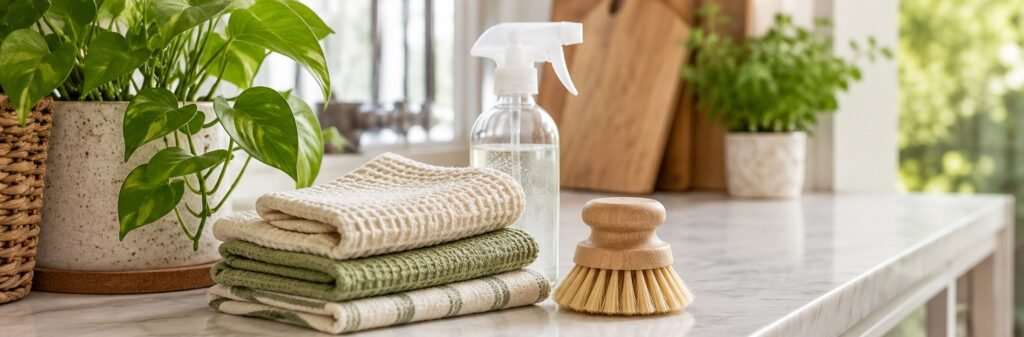
Low-waste cleaning means limiting disposable supplies, unnecessary packaging, duplicate products, and tools that wear out quickly. It’s a practical extension of intentional living: choosing what serves your home instead of automatically buying more.
Don’t assume a product is environmentally preferable just because it has leaves on its label. Look for specific, credible information about ingredients, packaging, durability, and appropriate use. Programs such as the U.S. EPA Safer Choice label provide more meaningful criteria than vague marketing language, although no label replaces reading the instructions.
Start with a 20-minute cleaning-supply audit
Before you order a refill kit or swap a single bottle, gather the products and tools you already own. Group sprays, soaps, brushes, sponges, and cloths by what they are intended to clean. You may discover several half-used products doing the same job.
- Keep: Products you still use, in their original containers and within their recommended use periods.
- Repurpose: Worn, clean cotton towels or shirts as reusable rags for appropriate tasks.
- Replace later: Make a list only when an item is nearly finished or a tool no longer works.
- Dispose responsibly: Check your municipality’s household hazardous-waste guidance for unwanted or unidentified chemicals; don’t improvise disposal methods.
Replacing everything with an attractive matching set is still consumption. Using what you already own is an excellent first step, and it costs nothing.
Five low-waste swaps worth considering
1. Reusable cleaning cloths
Old cotton T-shirts, washable cloths, and durable dishcloths can replace many paper towels for everyday spills. Their value depends on repeated use, sensible laundering, and keeping cloths for separate tasks to reduce cross-contamination.
Microfiber is effective, but synthetic textiles can release microfibers in washing. If you already have microfiber cloths, use and care for them rather than throwing them away just to purchase something trendier.
2. Long-lasting scrub brushes
A sturdy brush that rinses and dries well may serve you longer than a succession of disposable sponges. A replaceable head can be useful when the handle remains in good condition. Choose durability over the appearance of natural materials.
3. Refills and concentrated cleaners
Refills and concentrates may reduce packaging, but only when they are practical to buy and use. Follow the manufacturer’s dilution directions exactly. Never blend different cleaning products or create your own mixture from leftovers.
4. Durable storage where appropriate
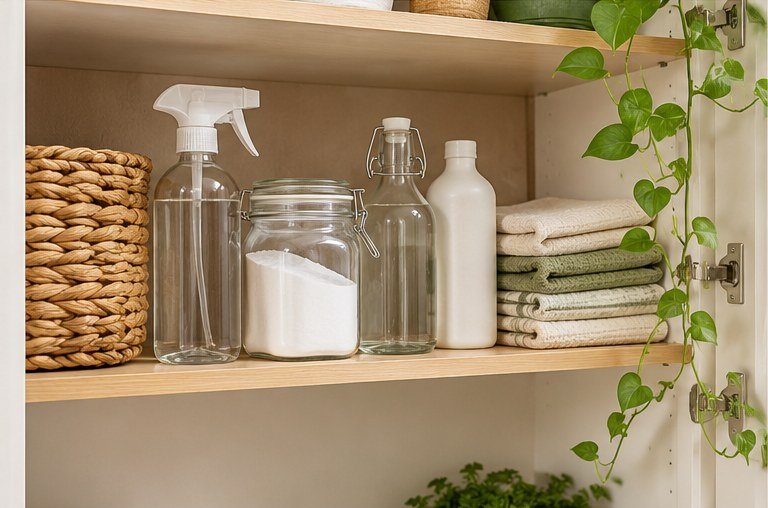
Reuse baskets and bins to keep cloths and brushes accessible. For household chemicals, prioritize safety over aesthetics: Health Canada recommends keeping products in their original containers, with labels intact and away from children and pets. Never transfer a cleaner into a food or beverage container.
5. Products you can actually dispose of locally
Before choosing something labelled compostable, check whether your local collection program accepts it. Compostable products don’t necessarily break down in a backyard bin, and a premium label doesn’t guarantee a better end-of-life outcome.
For more realistic household changes, see our guide to sustainable kitchen swaps.
Cleaning safely: what matters more than “natural”
Natural doesn’t automatically mean harmless. Essential oils and scented products may bother sensitive people or pets, and homemade cleaning combinations aren’t automatically effective or safe. Use products suitable for each surface, read labels, ventilate as directed, and keep household chemicals securely stored.
Never mix bleach with ammonia, vinegar, acids, or other cleaning products. Such combinations can release dangerous gases. Avoid mixing other household cleaners as well, unless their labels specifically direct you to do so.
Cleaning, sanitizing, and disinfecting aren’t the same
Routine cleaning removes soil and many germs. Sanitizing reduces germs to an appropriate level, while disinfecting uses a suitable product to kill targeted germs on a surface. Everyday cleaning may be enough for many household tasks, but food-contact surfaces, contamination from raw meat, and illness can call for additional food-safety or disinfection steps.
If you’re disinfecting, choose a product approved for the intended use, clean visible dirt first when directed, and follow the labelled contact time. The surface often needs to remain wet for that time. Follow food-contact surface rinsing instructions where applicable. CDC home cleaning guidance explains when additional disinfection is useful.
Vinegar can help with some mineral deposits on compatible surfaces, but it is not a substitute for an appropriate disinfectant and can damage natural stone or some finishes. Test any cleaner against the surface manufacturer’s guidance instead of relying on social-media recipes.
A realistic weekly low-waste cleaning routine
You don’t need a huge weekend cleaning marathon. Try one small focus each day, adjusting the schedule to your household’s hygiene needs and available time.
| Day | Quick task | Low-waste habit |
|---|---|---|
| Monday | Wipe everyday kitchen surfaces | Use a clean washable cloth and appropriate cleaner |
| Tuesday | Clean bathroom sink and mirror | Keep a separate bathroom cloth |
| Wednesday | Sweep or vacuum busy areas | Maintain the vacuum according to instructions |
| Thursday | Tidy a fridge shelf or spill zone | Use existing supplies before buying more |
| Friday | Clean toilet and shower | Use each product only as directed |
| Saturday | Mop as needed; change linens | Launder reusable cloths appropriately |
| Sunday | Reset supplies and dry brushes | Check what actually needs replacing |
These are suggestions, not a rulebook. A busy week might only allow a few essential tasks. Prioritize hygiene, deal with spills when they happen, and resume the routine without trying to “catch up” on every missed box.
How to make the habit stick
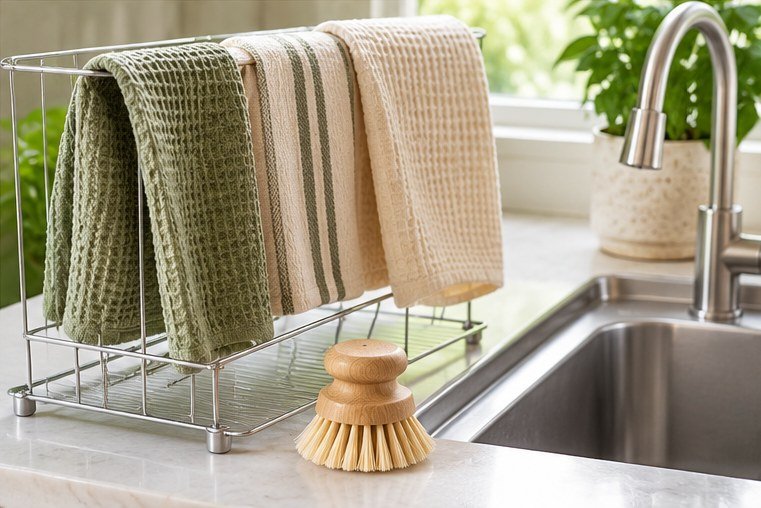
Habit consistency is easier when you make the next action obvious. Put a clean cloth near the kitchen sink, keep the brush where it can dry, and pair a tiny cleaning task with something you already do.
- After making coffee: Wipe a safe, ready-to-clean part of the counter.
- After brushing your teeth: Wipe the sink with its dedicated cloth.
- After putting away groceries: Check for a spill that needs attention.
Habit-building takes different amounts of time for different people and behaviours. Research on everyday habit formation suggests consistency matters, but no one needs to reach a magic number of days. Missing one day is simply part of life.
For a wider perspective on making room for what matters, read our guide to curated living.
Your first seven days: keep it simple
- Day 1: Take stock of your existing supplies.
- Day 2: Choose a few suitable reusable cloths.
- Day 3: Read the labels on two frequently used products.
- Day 4: Place tools where they’re used and stored safely.
- Day 5: Attach a 90-second task to an existing routine.
- Day 6: Wash cloths and let brushes dry properly.
- Day 7: Notice what worked—and change what didn’t.
The aim isn’t to prove how little waste you can produce in a week. It’s to create a home-care system you can actually live with.
Frequently asked questions
Do I need to replace all my cleaning supplies?
No. Start with safe, usable products you already have. Replace items thoughtfully when needed, not simply because an alternative is marketed as sustainable.
Can I use reusable cloths instead of paper towels?
For many everyday cleaning jobs, yes. Use separate cloths for different tasks, launder them appropriately, and follow hygienic cleaning procedures for food-contact areas.
Is vinegar enough to disinfect my home?
No. Vinegar is not a substitute for an approved disinfectant when disinfection is needed. It can also damage certain surfaces.
What’s the best first low-waste change?
Use up what you already own and introduce one washable cloth or durable tool you know you’ll use repeatedly. Simplicity usually beats a complicated replacement plan.
A simpler, more intentional way to clean
A low-waste cleaning routine isn’t a perfect shelf of matching bottles. It’s a set of practical choices: fewer unnecessary purchases, dependable reusable tools, safe products, and small habits that survive busy weeks.
Start with one change this week. Use the cloth you already have, finish the cleaner already in your cupboard, or make one five-minute reset part of your day. That’s how a routine becomes sustainable in more ways than one.