

We may earn money or products from the companies mentioned in this post.
It’s surprisingly easy to spend more money trying to get organized. One cluttered drawer turns into a shopping cart full of dividers, matching baskets, and storage bins—and somehow, the house still feels just as difficult to manage.
Here’s a different approach: organize your home without buying more storage. Start by noticing where things collect, giving everyday belongings practical homes and making small changes you can maintain. The result doesn’t need to look like a showroom. It needs to work on a Tuesday when you’re tired.
START HERE: Choose one frustrating area, group similar items, decide what needs to be within reach, and use the containers you already own. A good organizing system saves steps; it doesn’t require a matching set of bins.
Why more storage isn’t always the solution
A basket can solve a real problem, but it can also disguise one. If you keep tossing random objects into a decorative bin, you’ve moved the clutter—not made your daily life easier. Before choosing an organizer, ask what needs organizing, why it’s ending up here and how often you reach for it.
You don’t need to reject storage products forever. Sometimes a well-chosen shelf or divider is exactly right. The point is to diagnose the problem before purchasing a solution. That reflects a broader idea in curated living: choose things for the job they do, not just the way they look.
Using items for longer is also consistent with Canada’s waste-reduction hierarchy, which prioritizes prevention and reuse ahead of recycling. Repurposing something you already have can be a sensible choice when it’s safe and suited to the task. Environment and Climate Change Canada explains that hierarchy here.
Do a 15-minute home organization audit
Instead of tackling the entire house, pick one small trouble spot: the entryway, a kitchen drawer, the bedside table or the shelf where paperwork accumulates. Set a timer for 15 minutes and observe before rearranging.
- Notice the pattern. What always lands there? Keys, chargers, receipts, hair accessories?
- Group like with like. Make small categories without buying containers first.
- Check frequency. Which things are used daily, weekly or only occasionally?
- Look around your home. Is there a spare basket, tray, small box or existing shelf that could help?
- Test the new location. Can you put everything away in a few seconds without rearranging other objects?
The best organizing clue is often where you naturally leave something. If keys keep landing on a table by the door, perhaps that table wants a small key dish. Working with your habits is usually easier than trying to force an elaborate new routine.
Nine clever ways to organize your home without buying anything
1. Group similar belongings together
Start with one category, such as batteries, pens, charging cables or craft supplies. Bring its contents together and check for duplicates before deciding where it belongs. Keep what you actively use close to its point of use; less frequently needed items can move to a higher or less accessible shelf.
Try it today: Collect the charging cables from one room, sort by purpose and create one safe, untangled place for them.
2. Repurpose baskets, trays and sturdy boxes
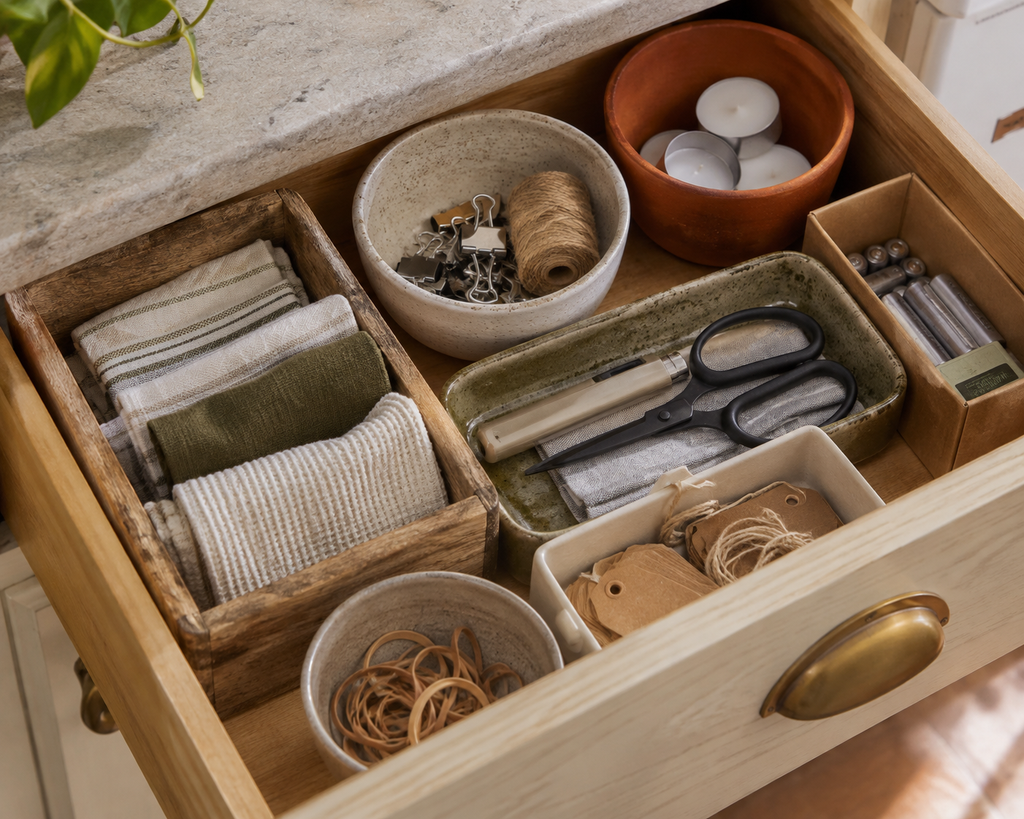
An unused serving tray can hold keys and sunglasses. An existing basket can contain scarves near the door. A clean, dry box might corral stationery inside a drawer. Choose containers that fit the task rather than buying matching organizers.
Be selective: a glass jar isn’t ideal for every task, and repurposed containers should never create a food or chemical safety risk. In particular, keep household cleaners and other chemicals in their original, clearly labelled containers.
3. Make simple drawer zones
Most drawers become frustrating because unlike items get mixed together. Try using small boxes or containers you already have to divide pencils from clips, utensils from measuring tools or makeup from hair accessories. Keep the most-used things at the front.
Try it today: Empty one drawer onto a towel, wipe it clean and return items in three or four easy-to-recognize groups. Leave room to reach into each section.
4. Give daily essentials one reliable home
The simplest organizing system may be a designated place for something you use every day. Keys live in one dish; glasses live on one shelf; the remote lives on the side table. That makes finding and returning them more predictable.
Keep the landing spot convenient. A beautiful tray three rooms away won’t help if the item is always needed by the front door.
5. Rearrange shelves by how often you use things
Put frequently used belongings at comfortable reach, heavier objects on stable lower shelves, and rarely used items farther away. Check furniture stability, and anchor tall furniture when appropriate to reduce tip-over hazards.
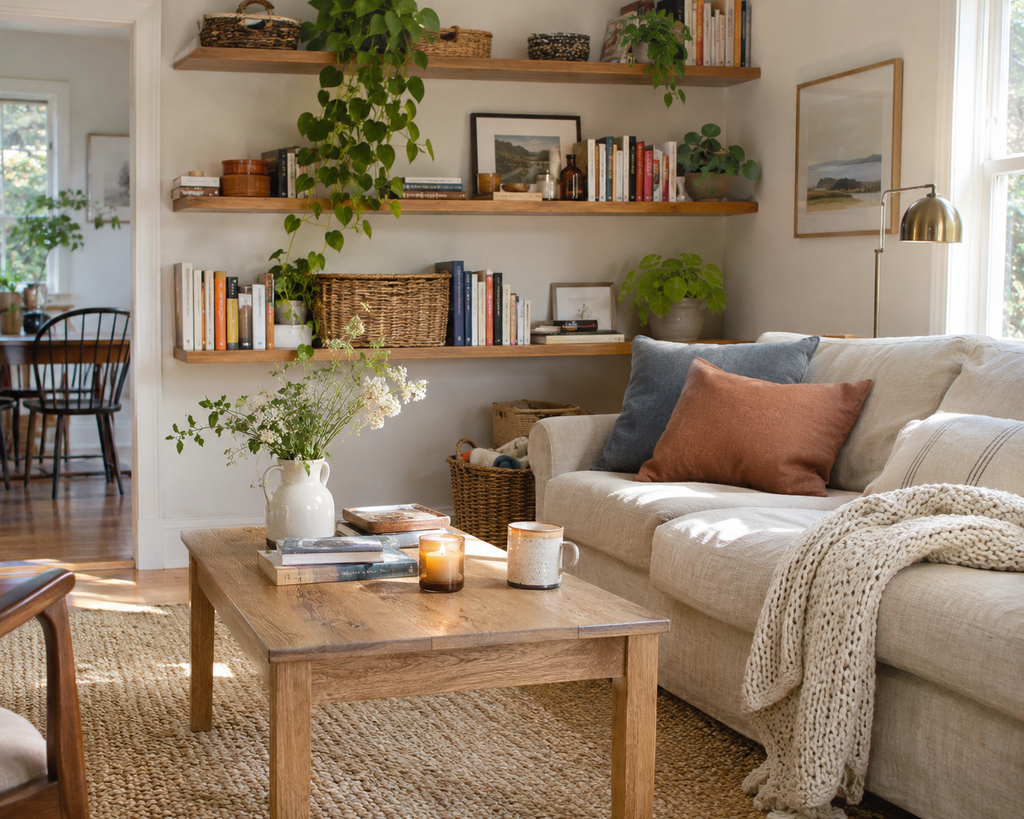
You can also create visual breathing room without removing meaningful possessions: group books, plants and collected objects by function, leaving enough space to reach what you need.
6. Create a practical entryway landing zone
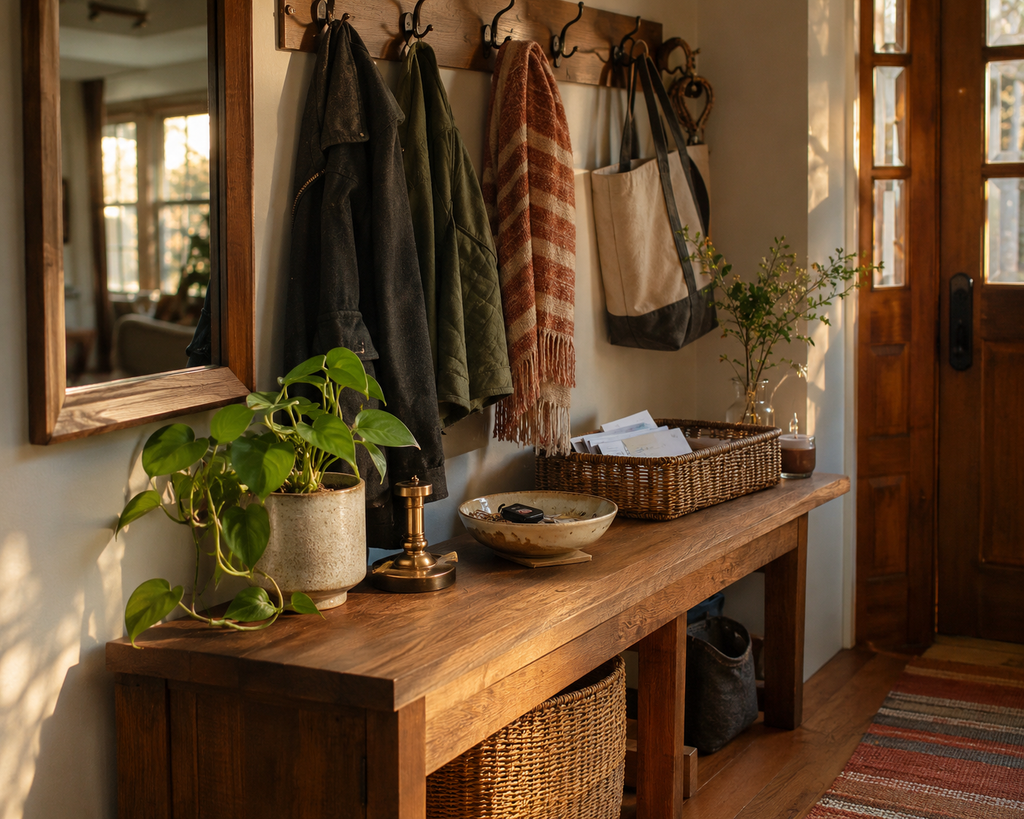
An entryway collects bags, coats, keys, shoes and mail because it’s a transition point. Instead of fighting that, give each category a nearby home. Reposition a hook you already own if it can be installed safely, use an existing basket for accessories and set aside a tray for pocket items.
Try it today: Identify the first thing you usually put down when you come home and give it a dedicated spot.
7. Organize clothes around your actual routine
You don’t need a capsule wardrobe to make getting dressed easier. Put current-season and frequently worn clothes where they’re easy to reach. Group workwear, casual clothes or activity-specific items in a way that makes sense to you, not according to someone else’s colour-coded system.
Clothes that need repair or laundering benefit from a clear, separate place so they don’t quietly migrate back into the clean-clothes pile.
8. Give household paperwork a simple flow
Mail and documents get messy when there is no next step. Create three destinations using existing folders, envelopes or trays: act on, file and recycle or securely shred. Sensitive records should be stored securely; don’t leave important personal information in a shared open tray.
A five-minute weekly review keeps the action pile from becoming permanent storage. For digital files, use a naming convention that helps you find documents without creating dozens of nested folders.
9. Attach a reset to something you already do
The most maintainable systems tend to fit naturally into everyday routines. After dinner, return stray kitchen items to their homes. Before leaving work, clear the desk. After laundry, put clothes away rather than creating a clean-clothes mountain.
A simple if–then plan can help: “If I finish making dinner, then I’ll put the cooking tools back before I sit down.” Research on implementation intentions suggests linking a familiar cue to an action can improve follow-through, although no single method works perfectly for everyone. The U.S. National Cancer Institute explains this planning approach.
Room-by-room home organization ideas
Different rooms need different systems. Use this table as a menu of ideas rather than a requirement to overhaul everything at once.
| Room | Common problem | No-cost solution | Easy maintenance |
|---|---|---|---|
| Kitchen | Utensils and tools get mixed together | Group by use; repurpose clean drawer containers | Reset after cooking |
| Bathroom | Small items crowd the sink | Keep daily-use items together on an existing tray | Put extras away weekly |
| Bedroom | Clothes collect on a chair | Designate a laundry spot and a rewear area | Two-minute evening reset |
| Living room | Remotes and books travel around | Use a familiar shelf or existing basket | Reset before bedtime |
| Entryway | Keys, bags and mail spread out | Assign a bowl, hook and paperwork spot | Check the mail pile weekly |
| Home office | Loose papers and chargers accumulate | Group by task; use existing folders | Clear desk after work |
The goal isn’t to hide every object. A good room feels easy to live in, even when there are books on the table and projects in progress. For broader seasonal adjustments, see our seasonal home refresh guide.
Organizing isn’t the same as decluttering
Decluttering asks whether you want to keep something. Organizing asks where it belongs and how to make it accessible. Sometimes they overlap, but you can improve a room without deciding whether every item deserves to exist.
A collection of vinyl records, art supplies or family keepsakes may be deeply meaningful. The aim is to find a way to enjoy and care for them without turning the rest of the home into an obstacle course. If you’re working through the bigger question of what matters to keep, our guide to simplifying life without getting rid of everything is a useful companion.
When space genuinely is limited, you may need to choose what gets priority or find a more suitable location. That isn’t a moral judgement about your belongings. It’s simply the reality of finite space.
How to make your new systems last
A system stays useful when putting things away is easy. If every object has to be moved to reach the one behind it, the setup may be too elaborate. If a basket fills instantly, its purpose may be unclear. Adjust the layout based on what actually happens during the week.
- Keep frequently used things close. Store them where the task happens, while keeping children’s access and safety in mind.
- Make categories obvious. Simple labels are helpful if household members can’t tell what goes where.
- Agree on shared spaces. Ask what works for other people who use the room instead of imposing a single aesthetic.
- Build in a quick reset. Five minutes at a natural transition can be more realistic than a huge weekend reorganization.
- Let the system change. Your needs will shift with work, family life, hobbies and seasons.
You don’t need a perfect streak or a showroom-ready home. If things stop working, make the system easier rather than automatically blaming yourself for not keeping up.
The seven-day no-spend home organization challenge
Each day focuses on one modest task, ideally 10–20 minutes. Pick a different order if your home needs it.
- Day 1 — Entryway: Give keys, bags or mail one reliable landing spot.
- Day 2 — Kitchen: Group utensils in one busy drawer using what you already own.
- Day 3 — Bathroom: Separate everyday items from occasional-use supplies.
- Day 4 — Bedroom: Make frequently worn clothes easy to reach.
- Day 5 — Living room: Reposition books, remotes or hobby supplies where they belong.
- Day 6 — Paperwork: Sort one small stack into act, file and securely dispose.
- Day 7 — Review: Notice which system made daily life easier, and adjust one that didn’t.
If one task takes longer than expected, stop when the timer ends. A manageable improvement is more useful than an exhausting half-finished overhaul.
FROM LIFECRAFTED CO.
Want a little more structure? Try the 7-Day Clutter Reset
These no-spend organizing ideas are a great place to start. If you’d prefer a guided next step, explore our 7-Day Clutter Reset, a LifeCrafted Co. product designed around taking on clutter in manageable stages. It’s an optional companion to the free tips above—not something you need in order to put them into practice.
Home organization mistakes worth avoiding
Buying containers before measuring the problem
A perfectly sized bin is useful; five unnecessary bins take up space. Inventory and measure the area before considering a purchase.
Organizing the entire house at once
Major overhauls can disrupt daily life and leave piles everywhere. Finish a small zone before starting another.
Prioritizing appearance over function
An attractive container isn’t helpful if opening it adds extra steps every time you need something. Choose access and ease first.
Creating a system no one else understands
Shared households work better with shared decisions. Ask what locations and categories make sense to everyone, particularly for common rooms.
Expecting a perfect result forever
Homes are dynamic. A workable system may need weekly resets or seasonal tweaks, and that’s normal.
Frequently asked questions
How can I organize my home without spending money?
Start with one small area, group similar items, move frequently used belongings closer to where they’re needed and repurpose suitable baskets or boxes you already own. Buy nothing until you know there’s a specific problem a purchase would solve.
What should I organize first?
Choose a spot that frustrates you repeatedly: the entryway, a kitchen drawer or your everyday paperwork. A useful first success is better than starting with the largest room.
How do I organize a small home with limited storage?
Prioritize easy access to daily essentials, keep heavy items stored safely, group related objects and use shelves and containers you already have. Decide which areas of the home need to remain clear for movement and everyday tasks.
Can I organize without decluttering everything?
Yes. Organizing and decluttering are different jobs. You can improve accessibility, make homes for meaningful possessions and simplify routines without conducting a major purge.
How do I keep my house organized long term?
Make returning items easy, build short resets into existing routines and revise systems when they no longer fit. Organization should reduce work, not create another chore.
A home that works for you
An organized home isn’t defined by matching bins or completely empty countertops. It’s a place where you can find what you need, enjoy the things you love and move through daily routines with less friction.
Choose one small area today. Use what you already own, remove an unnecessary step and see how the space feels after a week. A handful of functional changes can be far more rewarding than an expensive organizational makeover.