

We may earn money or products from the companies mentioned in this post.
A weekend away can be exactly the reset you need—until accommodation fees, restaurant bills, and an overpacked itinerary make it feel like a second job. The good news? An unforgettable short trip doesn’t have to involve a luxury resort, a flight, or a packed schedule.
A meaningful budget weekend getaway begins with a simple question: What do I want this trip to feel like? From there, it’s easier to choose a destination, make space for experiences that matter, and spend intentionally without missing out.
Quick take: Set a total budget before choosing a destination, compare all-in accommodation costs, keep travel time reasonable, choose one experience worth paying for, and leave room for rest and spontaneity. The goal isn’t the cheapest possible trip; it’s a getaway that feels worthwhile.
Start with the reason you’re going
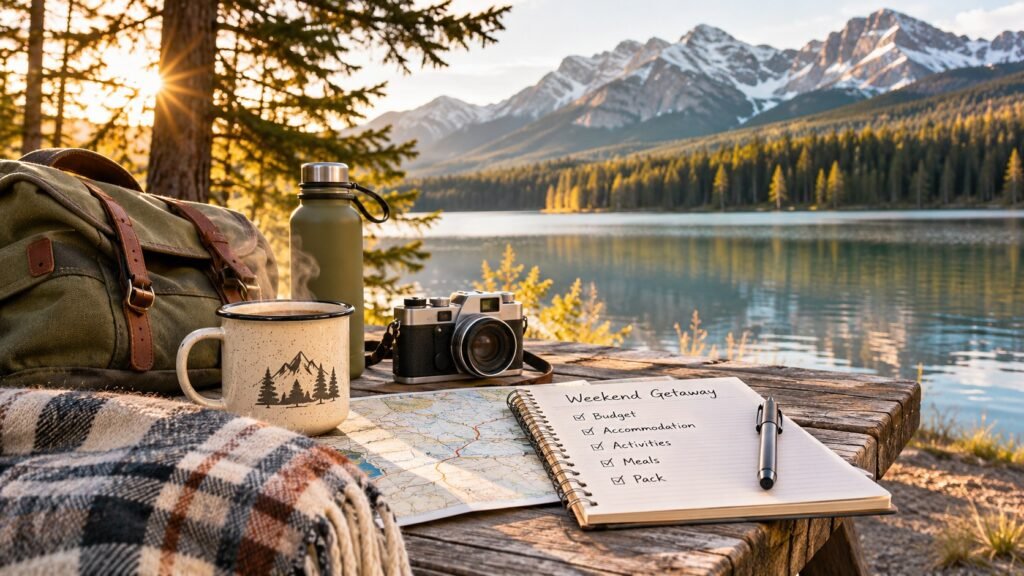
Before searching for hotels, finish this sentence: “This weekend is for ______.” Maybe it’s reconnecting with a friend, being outside, visiting a new town, or simply resting somewhere different. Your answer becomes a filter for the rest of the plan.
If the purpose is rest, skip the day-long list of attractions. If it’s discovery, a walkable small town might be worth more than an isolated accommodation bargain. If it’s quality time, perhaps you’ll choose one lovely dinner and save on everything else.
This echoes the idea behind our guide to slow travel: fewer rushed stops can create more space to notice and enjoy the place you’re visiting.
Build the budget before choosing the destination
Begin with a total amount you can comfortably spend. Then divide it among transportation, two nights of accommodation, food, activities, parking and miscellaneous costs. Leave a little room for surprises rather than assuming every expense will go perfectly to plan.
Here’s a fictional planning example for two people sharing a room over two nights, in Canadian dollars. These are illustrative figures—not researched hotel quotes, typical national averages, or promises about what a trip will cost.
| Expense | Budget-minded example (CAD) | More comfortable example (CAD) |
|---|---|---|
| Transportation | $60 | $100 |
| Accommodation, 2 nights | $240 | $400 |
| Food and drinks | $120 | $220 |
| Activities | $30 | $90 |
| Parking and extras | $20 | $40 |
| Contingency buffer | $47 | $85 |
| Total | $517 | $935 |
Accommodation and food are the largest line items in this sample. Depending on your region, those numbers may be much higher or lower. Check actual availability and full prices before committing. If your budget is tight, consider a day trip or a one-night stay instead of forcing a two-night plan to fit.
Calculate transportation realistically
For a drive, estimate the return distance, your car’s fuel or charging needs, parking and any tolls. For train or bus travel, include transfers between the station and your accommodation. The cheapest ticket isn’t necessarily the cheapest entire journey.
Compare the real price of accommodations
A low nightly rate may look attractive until fees, parking, taxes, or a distant location are factored in. Compare the all-in cost for the same dates and number of travellers. Look carefully at cancellation rules, check-in windows and whether breakfast or parking is included.
Canada’s Competition Bureau explains drip pricing, where mandatory fees are added to an initially advertised price. The practical takeaway for travellers is simple: check the final payable amount before deciding which option offers the best value.
Location also matters. A modest room close to the town centre could save on driving, parking and time compared with a cheaper stay far away. If your plans might change, consider whether a flexible cancellation policy is worth the additional cost.
Choose somewhere closer, quieter or less obvious
You don’t need a long journey to feel away. Look at small towns, regional cultural attractions, lakeside communities, heritage sites and local trails within a comfortable travelling distance. Two hours each way might be a useful personal starting point, but it’s not a rule: consider the weather, road conditions, your energy and the amount of time you actually have.
Regional tourism organizations and municipal websites are useful for finding seasonal events, galleries, walking routes, markets and community festivals. Confirm opening hours and accessibility rather than assuming a venue is open year-round.
If you’re considering a national park, check Parks Canada’s official reservation information for the destination and season. Fees and reservation rules vary, and popular sites can require planning ahead.
Seven ways to make a weekend getaway more affordable
1. Compare total costs, not just headline prices
Write down each option’s full cost, cancellation terms and distance from the things you want to do. A simple side-by-side comparison beats choosing the lowest nightly rate and hoping for the best.
2. Look beyond peak dates
When your schedule permits, investigate weekday-adjacent stays and shoulder-season dates. Some destinations may offer better value outside their busiest periods, but weather, limited services and shorter opening hours can offset those savings. Always compare actual offers.
3. Keep some meals simple
Bring breakfast basics and familiar snacks, or stop at a local market for picnic supplies. That can leave room in the budget for a restaurant you genuinely want to try. Respect food storage requirements and any rules about eating outdoors.
4. Find low-cost experiences
A scenic walk, a local market, a public garden, a community event or a historic neighbourhood can be the heart of the trip. Some trails and attractions charge admission or parking, so check before you arrive.
5. Choose one planned splurge
Decide in advance whether your priority is a special dinner, guided activity, performance or cultural visit. Choosing deliberately makes it easier to skip impulse purchases that aren’t especially meaningful to you.
6. Leave breathing room in the itinerary
An itinerary with every hour booked can become exhausting. Try one main activity each day and leave the rest flexible. The time to sit by the water, browse a bookstore or talk over coffee is part of the getaway—not a planning failure.
7. Keep a small flexibility fund
Set aside an amount you’re comfortable spending spontaneously, whether that’s $20 or $50. The point is to enjoy an unexpected stop without losing track of the broader budget. Don’t cut corners on safety, fatigue, necessary gear or reliable transport to save money.
Plan experiences rather than filling every hour
Think about how you want to remember the weekend. That might be sunrise beside a lake, a locally owned café, a walk through a historic district, or a quiet afternoon with someone important to you.
Respect the places and communities you visit: follow trail signs, pack out litter, respect wildlife and follow guidance at cultural and Indigenous heritage sites. The Leave No Trace Canada principles offer a helpful framework for responsible outdoor visits. For more ideas, see our conscious traveller’s guide.
A relaxed Friday-to-Sunday itinerary
Here’s one illustrative two-night weekend plan. Activity costs are estimated amounts in Canadian dollars for two people and exclude accommodation and transportation; you would need to adjust them for your destination. Pick and choose rather than booking everything.
| Day | Experience | Illustrative cost (CAD) | Why it works |
|---|---|---|---|
| Friday evening | Arrive, walk around town, simple picnic | $20–$30 | Low-pressure arrival |
| Saturday morning | Market and coffee | $25–$40 | Explore local food and atmosphere |
| Saturday afternoon | Trail or lake walk; packed lunch | $0–$15 | Time outside without rushing |
| Saturday late afternoon | Museum, gallery or heritage stop | $10–$30 | Connect with local history |
| Saturday evening | One restaurant dinner | $50–$90 | Planned special experience |
| Sunday morning | Slow breakfast, reading and conversation | $10–$20 | Room to unwind |
| Sunday midday | Short scenic stop, then home | $0–$10 | Unhurried departure |
Treat these as an itinerary menu rather than seven required purchases. For rain, substitute a museum, bookshop, café or accessible indoor attraction. For winter or remote trips, check road and weather advisories, bring suitable supplies and avoid driving while fatigued.

Pack lightly without sacrificing comfort
A short trip doesn’t need a new wardrobe or a bag of single-purpose gadgets. Check the forecast and planned activities, then start with versatile items you already own.
- Comfortable shoes and clothing layers suitable for conditions
- Weather protection appropriate for the season
- Reusable water bottle and any necessary snacks
- Medication, basic toiletries and personal essentials
- Phone charger, relevant maps and booking confirmations
- A book, journal or small game for unstructured time
If you plan to camp, evaluate the real cost of gear, campground fees and travel before assuming it’s the least expensive option. Borrowing or renting infrequently used equipment may be more sensible than buying it.
Common budget weekend mistakes to avoid
- Comparing only nightly rates: Calculate accommodation, taxes, parking and additional fees together.
- Overloading the schedule: Keep the plan flexible enough to enjoy it.
- Ignoring transport costs: Add fuel or charging, tolls, parking and transfers.
- Booking non-refundable options casually: Read policies, especially for seasonal trips.
- Skipping the money conversation: When travelling with others, agree on a budget and how shared costs will be divided.
- Choosing unsafe shortcuts: Don’t sacrifice rest, permitted accommodations or necessary equipment just to stay under a target.
Frequently asked questions
How much should I budget for a weekend getaway?
It depends on destination, season, transport, accommodation and group size. Begin with an amount you’re comfortable spending and build a real itinerary from quoted prices. The figures in this article are examples, not national averages.
What is the cheapest way to plan a short trip?
Start close to home, compare total prices, bring some food and prioritize free or low-cost experiences. A day trip may be more affordable than paying for two nights away.
Are vacation rentals cheaper than hotels for two nights?
Sometimes, but not always. Compare taxes, required fees, parking, cancellation conditions and location before booking. Short stays can make fixed cleaning fees especially noticeable.
How far should I travel for a weekend away?
Choose a distance that leaves enough time and energy to enjoy your destination. For some travellers, a short drive is ideal; for others, a longer journey is worthwhile. Factor in road conditions and the trip’s purpose.
Can a short trip still feel restful?
Yes—especially when you plan less, choose a comfortable base and leave time between activities. One memorable experience and plenty of breathing room can be enough.
The most meaningful getaways aren’t always the biggest
A budget weekend getaway doesn’t have to feel like a compromise. By choosing a clear purpose, looking at total costs, travelling at a comfortable pace and spending on experiences that matter to you, a couple of days can feel surprisingly full.
Start with one place you could reach easily. Write down what you’d love to feel or experience there, set your budget and let everything else follow. Your best weekend might be closer than you think.